

Commentary
Week: December 1st - 5th, 2025
12/1/25 - Recognizing Christmas in Public Schools
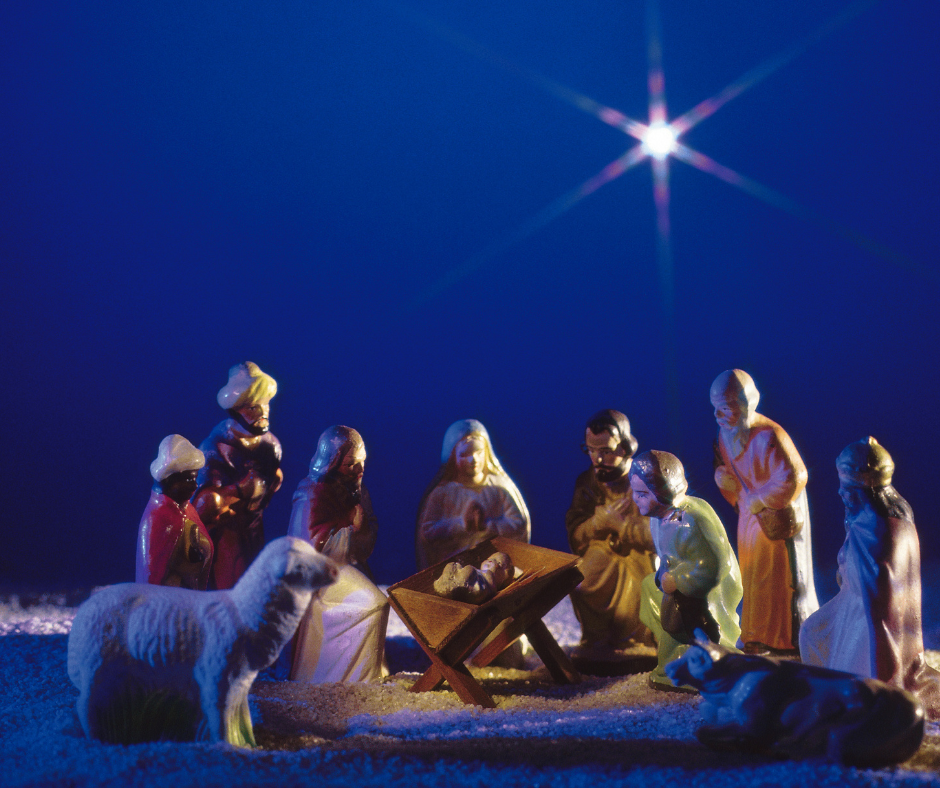
In a public school, when Christmas is presented educationally, rather than devotionally, recognizing the religious aspects of Christmas is a legitimate academic activity.
It is best to teach about Christmas using words of attribution such as: “Christians believe...”; “The Bible says...”; “Christmas is special for Christians because…” In other words, attribute the devotional aspects of the holiday to Christians.
I recommend you also talk about “acknowledging” Christmas rather than “celebrating” it. This won’t exclude the classmates who have different beliefs and may not “celebrating” Christmas. No students should be made to feel excluded. But to understand American culture, learning the religious aspects of the holiday is educational.
For articles and lesson ideas on what schools can do for Christmas, visit GoGateways.org/christmas.
12/2/25 - Teaching about Holidays in Your Classroom

Many public school educators think that if Christian holidays are recognized in class, then all other religions must be given equal time. The truth is, no court has said equal time must be given to all religion’s holidays.
How much time spent on each holiday should be determined by its relevance in American culture, the local community, and the makeup of the classroom. The issue is one of proportionality. For example, if there is a sizable Muslim population in your community, certainly students should learn about their holidays. Teaching about Christian holidays helps students gain an understanding of the culture they live in. They see Christmas decorations throughout their community. What does it all mean? Why is it being celebrated? All students benefit from understanding the answers to those questions. For articles and lesson idea regarding Christmas and public schools, visit www.GoGateways.org/christmas.
12/3/25 - What Holidays to Teach

Learning about American history and culture is, of course, an important part of a student’s education. And a good education for all students needs to include learning about Christianity – the biggest religion in America. While lessons about the Bible and Christianity can be creative and engaging, using art, drama, literature, and music, they should not be devotional or worshipful.
When it comes to holidays, two questions will help you decide which holidays to emphasize and how much time to spend on them. First, which religions have had the most influence in shaping American culture? And second, which religions have a prominent influence in your local community?
You can be a gateway to better education for your schools this holiday season. For articles and lesson ideas, visit GoGateways.org/christmas.
12/4/25 - “Jesus Loves Me” Banned from School

A face mask with the phrase, “Jesus Loves Me,” was recently (2021) banned by a public school in Mississippi (the Bible Belt of all places!).
School administrators forced Lydia Booth, a third-grade student, to remove her mask because of its (quote unquote) “religious message.” Other students were allowed to wear masks with, “Black Lives Matter” and sports logos on them. But a third-grader stating that Jesus loves her was apparently too much.
In a blatant anti-Christian bias, when Lydia’s mother pointed out that there was no policy against religious messages, school officials changed their policy to add prohibition against religious messages! This is a clear violation of federal guidelines. Lydia’s parents, and our friends at Alliance Defending Freedom, are now suing the school district for religious discrimination.
To learn more about religious expression in public schools, visit GoGateways.org/freetospeak.
12/5/25 - Teaching Discernment

Opinions can be interesting to read and can probably never be eradicated from your children’s textbooks. But to teach your children discernment you will need to teach them to distinguish between opinion and fact.
For instance, in the social studies textbook, A History of US, the authors write of Jimmy Carter’s inauguration being free to the public, while Reagan’s was by invitation only with expensive invitations, stating:
“Harry Truman would have been horrified, but many Americans seemed awed by the glitter and glamour."
Well, the authors simply don't know how Harry Truman would have felt. To distinguish between opinion and fact as you read a textbook, ask yourself: Is what the author saying verifiable by objective facts?
You can be a gateway to better education for your children. For help in evaluating your children’s textbooks, visit the PARENTS tab on our website.