
Get Your Child in the Best Classroom Next Year

classroom-2787754_1920.jpg
Print Friendly and PDF

Plan This Spring for Placement This Fall

Each year, the interaction between the students in a classroom and the teacher create a unique environment for learning. No two classes are the same and no two years are the same. Placing your child with the right teacher and the right students can make all the difference in the world.

"A student who attends a particular school is not educated in the whole school," writes Edward Pauly. "He or she is educated in particular classrooms within that school." In his book, The Classroom Crucible, the educational researcher summarizes his research: "A school and its policies do not necessarily determine students' educational experiences. The distinction between the school and its classrooms is crucial; teaching and learning take place in individual classrooms, which can easily differ from each other." 

In his research, Pauly found two factors which significantly impacted student learning: (1) the teacher's ability, and (2) the mix of students in the class. "Teachers and students are the authors of the work that takes place in classrooms, and they develop different methods of doing their work in each classroom," he writes. 

Pauly points out what any experienced teacher can tell you: a teacher who is successful one year with a particular classroom of students may not be as successful the next year with different students. What takes place each year between teacher and students is a 'negotiated curriculum.' "Teachers depend on their students to do the work of learning, a situation that creates endless opportunities for students to influence the teacher," he writes. Pauly continues, "The success of teaching and learning depends on the willingness of the classroom's members to pay attention, cooperate, and treat each other reasonably well." 

Placing Your Child 

Pauly's research on the importance of placing your child in the proper classroom means that you should take steps to help determine which classroom your child will be in. Here are his five suggestions for parents:

  1. Contact your child's school in the spring to determine when administrators will assign the next year's students to classrooms.
     

  2. Find out as much as you can about the teachers your child might have next year and the classmates he or she may be with. Network with other parents whose children have had these teachers. Visit the classrooms of next year's teachers and observe their style of teaching.
     

  3. Give the principal specific, written information about what you believe your child needs in next year's classroom - in both the teacher and fellow classmates. Does the child need more or less structure and discipline? Does he or she need higher expectations? Does he or she need to be separated from a classmate who caused significant problems for your child this year?

    You can't interview every child who will be your child's classmate. But you can write to the principal and let him know what kind of classroom, teacher, and classmates you think your child needs.
     

  4. Provide the relevant family information that would help an administrator place your child in the appropriate class. Is there a sibling rivalry that you could avoid? Are you going through a divorce and your child needs an especially loving and patient teacher?
     

  5. Keep in mind that if the principal doesn't place your child in a classroom that will work for your child, you can have him or her transferred. Be persistent in your requests. Be sure to give well-reasoned defenses for your judgments. Often, persistence pays off. However, listen to the school staff, as well. They have insight into your child's performance at school that you might lack.
     

These steps require extra time and attention. But, your child may reap the reward of having a better education than he would without your efforts. 

© Eric Buehrer

Model Policy Regarding Profanity and Abusive Language

jason-rosewell-60014-unsplash.jpg
Print Friendly and PDF

Enforcement of this policy requires a commitment from all educators and staff. 

1. Students will know from the first day (many freshmen will know at Freshman Orientation) that intentional and even casual profanity will not be tolerated. 

2. The very FIRST time that a student is referred to the Dean, a parent will be called and told exactly what the child said, and will be asked to support us in correcting the problem. Those guilty of using casual/non-abusive profanity will be required to serve one after-school or before-school detention for their first offense. 

3. If a first-time offender has used abusive, combative-style profanity (inciting another to fight, etc.), the parent is still called, but the penalty will be harsher, such as one or two days of In- School Suspension (ISS) or Out-of-School Suspension (OSS), required conflict mediation, and a warning that repeated violations will quickly lead to long suspensions and potential loss of credit and/or expulsion. 

4. If the first-time offender has used abusive, threatening profanity toward a teacher or staff member, an OSS of at least three days will be assessed and a parent conference will be held to discuss whether or not an expulsion is in order (definite expulsion if the teacher has been threatened with bodily harm or death). 

5. Repeat offenders of casual, non-threatening profanity will, upon the second or third offenses, be placed in ISS for at least one full day, and will be assigned two days or more of OSS for any additional violations. As with any case of repeated violations of rules, expulsion from school or referral to an alternative school may occur. 


 Permission granted to make copies of this for school policies. 

National Day of Prayer

National Day of Prayer 2020.jpg
Print Friendly and PDF

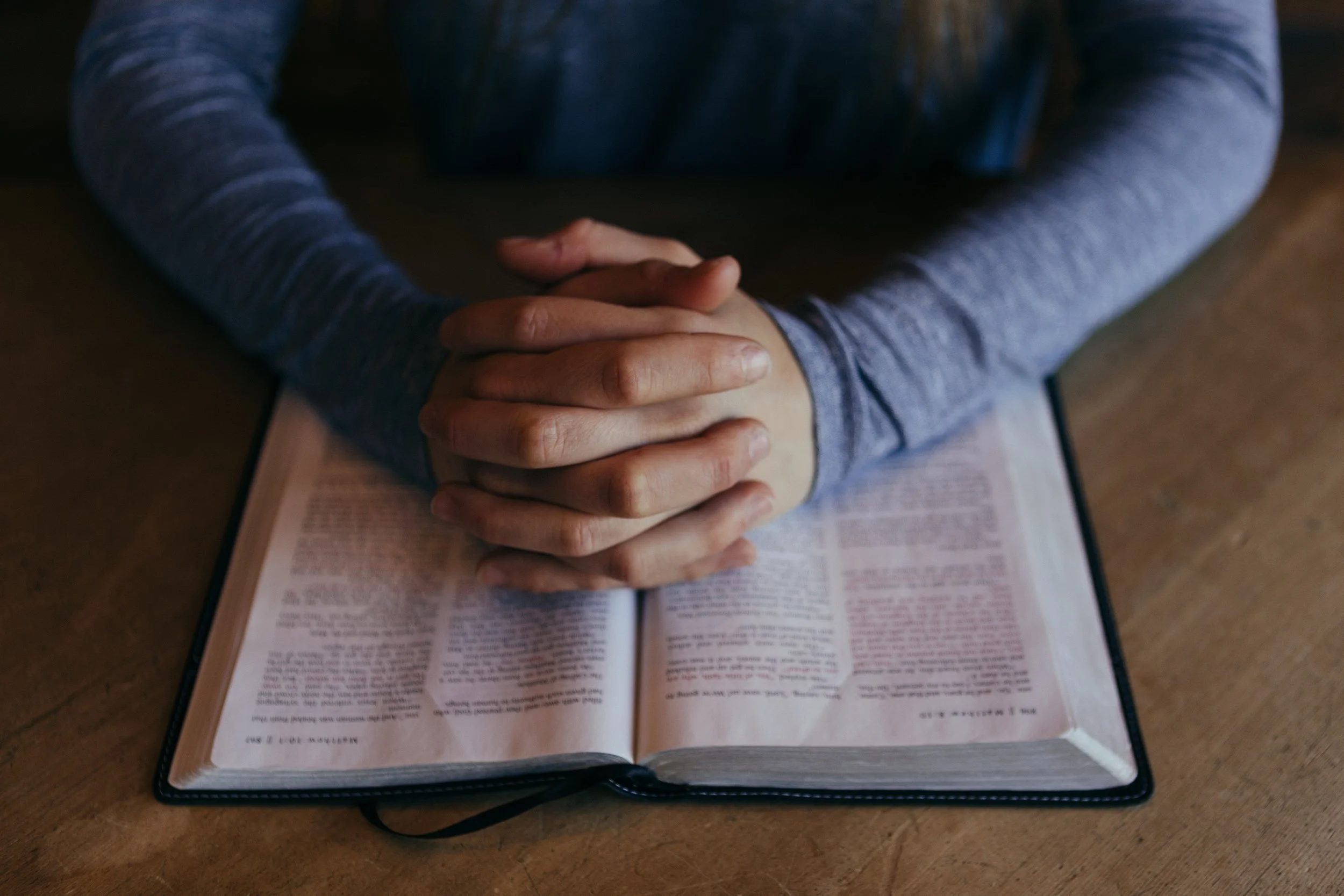
"Significance of the National Day of Prayer

The National Day of Prayer has great significance for us as a nation as it enables us to recall and to teach the way in which our founding fathers sought the wisdom of God when faced with critical decisions. It stands as a call for us to humbly come before God, seeking His guidance for our leaders and His grace upon us as a people. The unanimous passage of the bill establishing the National Day of Prayer as an annual event, signifies that prayer is as important to our nation today as it was in the beginning.

woman praying.jpg

Like Thanksgiving or Christmas, this day has become a national observance placed on all Hallmark calendars and observed annually across the nation and in Washington, D.C. Every year, local, state, and federal observances were held from sunrise in Maine to sunset in Hawaii, uniting Americans from all socio-economic, political and ethnic backgrounds in prayer for our nation. It is estimated that over two million people attended more than 30,000 observances – organized by approximately 40,000 volunteers. At state capitols, county court houses, on the steps of city halls, and in schools, businesses, churches and homes, people stopped their activities and gathered for prayer." - nationaldayofprayer.org/about

The National Day of Prayer is on the 1st Thursday in May. You can learn more about this national event by using this link.

Students have the liberty to express their faith at school (including prayer). Gateways and the Alliance Defending Freedom have teamed together to produce a pamphlet entitled, Free to Speak. The pamphlet includes quotes from the U.S. Department of Education (2020) Guidance on religious liberties for students and educators in public schools.

Gateways has also created a student prayer card. To learn more about the card, click here

young girl head bowed - istock paid.jpg

Parent Seminar (Keeping Their Faith in Public Schools)

k-23-3040c-bw_3-id-46110-jpeg.jpg
Print Friendly and PDF

This ninety-minute seminar equips parents to counter the negative effects of schools discouraging students from thinking about the world in religious ways.

  • The five keys to determining if you should remove your children from a classroom activity
  • A powerful way to teach your children discernment about what they learn
  • Your children’s religious liberties in class
  • How you can successfully address a concern with a teacher in a gracious way
  • Teaching your children a biblical definition of tolerance so they hold fast to their moral values and convictions
  • How to encourage your children toward good character

Video for Church Announcement


Keeping Their Faith in Public Schools is part of our larger Faith, Freedom & Public Schools event for teachers. 

For more information on bringing Faith, Freedom & Public Schools to your community, email kim@gtbe.org 

Starting a Bible Club in your Local Elementary Schools

Print Friendly and PDF

By Shari Hawkins and Kim Yetterberg

The following are some tips to help you start and develop a great Bible Club at your local elementary school. God has many blessings in store for your journey. We have always been amazed at how God worked. Hopefully the following ideas will give you some guidelines to create your own Bible Club. 

Girl thumbs up PAID.jpg

[Editor’s Note: The steps and tips below will be easier with the help of your local Child Evangelism Fellowship (CEF) chapter director. They have over 6,000 after-school clubs around the USA and are experienced in many details. CEF can even train people on how best to run a club. To see if there's a chapter near you, go to https://chapters.cefonline.com. Even if there isn't a local chapter, the state director can give you helpful guidance.]

Approaching the School Administration

1. Pray before you approach the school principal. Take another parent if it makes you feel more comfortable. 

2. Explain that you would like to start a nondenominational Bible Club during non-school hours. 

3. Have a copy of legal documentation to give to the principal. Explain that you want to make sure your club operates within the law and that you have made a copy for him or her to keep. 

4. Ask what school space would be appropriate so that the club does not interfere with other school activities. (The principal and I brainstormed and came up with the PTA portable building. It was used to store PTA items and was empty most of the time. We did try to use a teacher's classroom, but it was hard to get the desks rearranged in time for the incoming students. The library or gym might be another possibility.) 

5. Tell the principal that part of the purpose of the club is to teach children good character and that one of the character traits you want to instill is serving others. The first service project could be providing flavored coffees and donuts or bagels at a school-sponsored teachers' workshop. Ask if there is an activity coming up where you could provide the refreshments. A principal will probably be happy for the offer, giving him or her one less thing to organize. Our teachers were very appreciative of the snacks provided by the club. This is a great way to build positive relationships with the school staff. 

6. The principal will probably want a teacher or two to be sponsors for the club. They monitor the meetings. Schools like the accountability, so have a teacher or parent fulfill this role. 

Tips for the Bible Club

1. Keep the club nondenominational (i.e., methods of baptism and speaking in tongues are not discussed). Stick to the basics of the Christian faith. 

2. We found meeting 20-30 minutes before school starts is the best time. After-school times don't work because so many students have to leave for day care and school buses. Tuesday proved to be the best day for us. We meet once a week. 

3. We usually have a 15-minute devotion or message. We have encouraged children to volunteer to prepare pre-approved lessons or help with object lessons. This encourages leadership qualities. The last five minutes are devoted to prayer requests. We gather in a circle and take prayer requests. A parent sponsor prays with the children. (Be careful...once we allowed a child to lead prayer and we didn't know she was a Buddhist. She started praying to Buddha.) 

4. You must provide permission slips for children to attend the club. (We include the day and time of the meetings, the names of the teacher sponsors, and the names and phone numbers of the parent sponsors, with a place for the child's name, address, phone number and parents' signature.) Usually the principal of the school will require the slip. If children want to invite a friend, give them a permission slip for their friend. We announce this at the end of every Bible Club time and pass out permission slips as children are leaving. 

5. Make it fun! We do lots of hands-on object lessons. Once a month we show a Christian video and serve donuts. 

6. We purchased club T-shirts. The children can wear them on Mondays to advertise for Tuesday's club meeting on campus. You don't have to do this. However, it is a great way to advertise on campus. 

7. Our club does a monthly service project to show appreciation for the school staff. Here are some examples:

  • Provide donuts for safety patrol kids.

  • Provide a carnation for each teacher. Each child may draw his or her hand and cut it out and attach a preprinted card that says, "Jesus loves you and so does the Bible Club." Then attach these to each carnation.

  • Make a large card and have all the Bible Club students sign it. Give the card to the administration office staff along with some baked goods in gift baskets provided by the Bible Club students' moms.

  • Cafeteria workers and janitors are other groups to show appreciation to.

Thanks to Shari and Kim for sharing these tips that worked for them as they started their Bible Club in San Antonio, Texas.